


The race to deliver critical minerals at scale is well underway. As demand continues to accelerate, mining companies are under intense pressure to boost production while operating safely, efficiently and at a greater rate than ever before, Vedrana Spudic, Head of Technology, Mining & Materials, for ABB Process Industries, writes.
It’s easy to assume this is a production challenge, but Spudic argues it’s much bigger than that. Increasing output is only part of the battle and it’s now a question of how mines are run.
Mines today are expected to deliver more while operating deeper and more remotely. At the same time, experienced workers are becoming harder to recruit, and pressure continues to grow around safety, efficiency and operational resilience. Extracting the ore is no longer the only challenge. Increasingly, the defining question is how mining operations are managed, connected and made resilient enough to meet demand. It’s a question the industry is learning how to address.
Traditional, site-based operating models are no longer enough. Operators are needing to rethink how people, assets and operational data are connected, with the end goal of faster decisions, greater consistency and more resilient operations across the entire mine.
The industry is talking about autonomy in the wrong way
Mention “autonomous mining” and the conversation quickly pivots to vehicles, haulage and AI. It has become the industry’s default answer, and it’s clear why. AI-enabled technologies have an important role to play, but this fixation on autonomy is a growing concern and has created one of the industry’s most persistent misconceptions: that autonomy begins with autonomous machines.
Autonomy itself is not a technology that can simply be turned on. It’s an outcome, and one which we’re a long way off reaching in totality. By starting with autonomous machines, we’re glossing over a much bigger and more immediate operational challenge, Spudic says.
With mining becoming one of the world’s most technology-intensive industries, it’s easy to get excited about the latest innovations. But the biggest changes in mining are often less visible. They’re happening in the way operations are connected, how decisions are made and how expertise is shared across multiple sites.
Before mines can become autonomous, they first need to become operationally connected. That means giving people the visibility, information and confidence to make better decisions across the whole mining operation, connecting systems that have traditionally worked in isolation and building an operating model that can support greater levels of automation over time.
Operational integration has to come first
Traditional, site-based operating models aren’t built for what is being asked of the industry today. As operations become larger, more remote and increasingly data-rich, disconnected systems and siloed decision making make it harder to respond consistently to changing operational conditions. True autonomy depends on connected operations, integrated operational technology and better decision making across the entire mining value chain. The way people, assets and operational data connect, or don’t, for that matter, is core to why so many operations are struggling to keep pace.
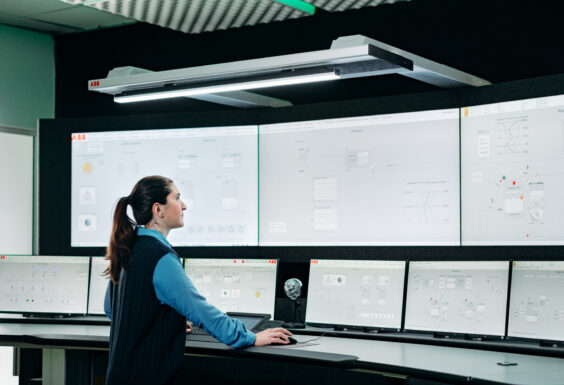
One place we’re already seeing this shift is in the growing role of integrated Remote Operations Centres, Spudic says.
While they’re often viewed simply as a way of managing mines from a distance, their real value lies elsewhere. The value is that they bring together people, data and systems in a way that fundamentally changes how decisions get made and is a more connected way of running a mining operation.
By bringing expertise together and improving visibility across multiple sites, they help operators make faster, more consistent decisions. That improves productivity, strengthens safety and builds real operational resilience. Importantly, these are benefits that aren’t dependent on achieving full autonomy. They’re benefits which are available now, while also being important steps to laying the foundations for autonomous operations in the future.
These benefits are valuable in their own right, regardless of where an organisation sits on its autonomy journey. Before autonomous systems can operate with confidence, organisations must first build the connected foundations that allow people to do the same.
True autonomy can’t be bought – it has to be built
There’s another misconception worth addressing: the idea that modernisation means starting from scratch. For most mining companies, this would be an impossible feat. The investments already made in operational technology are significant and ripping up and replacing systems outright would be costly, disruptive and largely unnecessary.
The most successful modernisation strategies Spudic is seeing are ones which are built on what’s already in place, introducing automation in areas where it genuinely delivers value and connecting existing systems. An approach like this allows organisations to improve progressively, generating measurable results step by step at every stage of the journey.
Autonomous mining won’t arrive through one breakthrough moment or transformative technology. It will emerge through hundreds of incremental operational improvements that allow organisations to modernise at a pace that reflects their own operational priorities.
In mining, the question is no longer whether autonomy is coming, but whether organisations are putting the right foundations in place to support it. The future will belong to those that treat autonomy as the outcome of operational excellence, not simply the deployment of new technology.
The post Mining’s north star: Paving the way to remote autonomy appeared first on International Mining.