


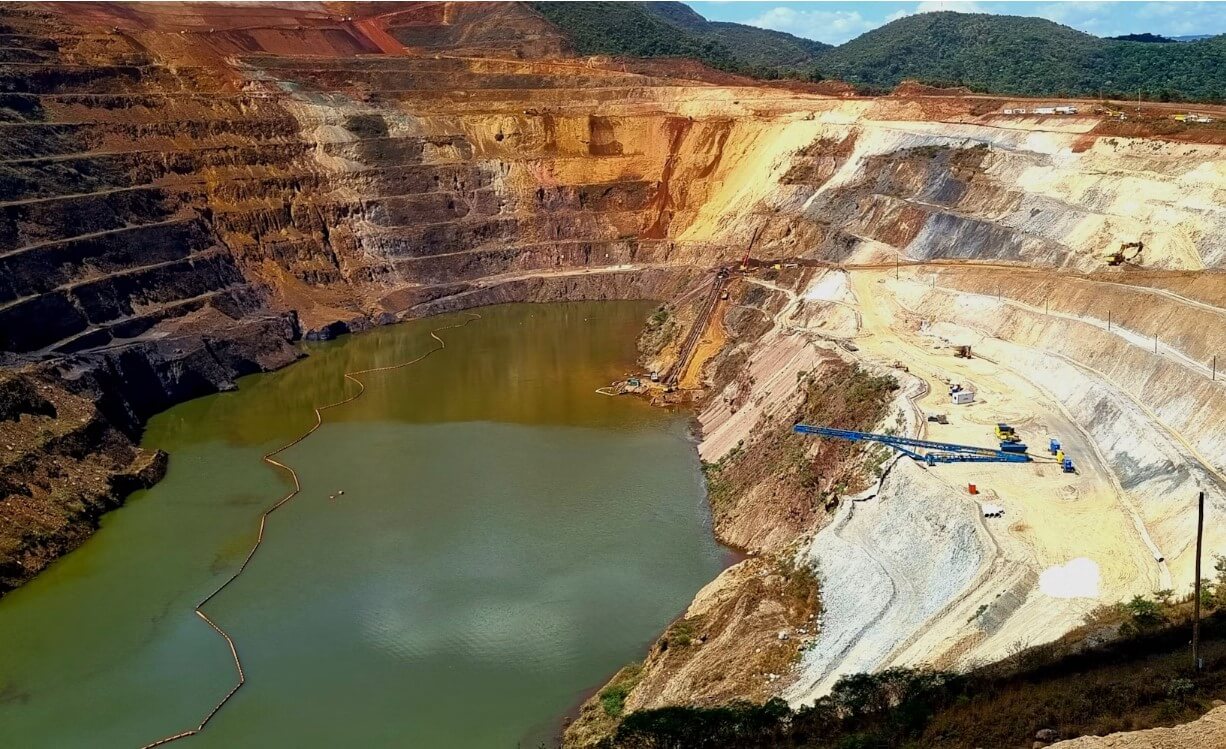
Image source: https://unsplash.com/photos/a-large-open-pit-with-a-large-body-of-water-MZz2sqSdkGk
Brazil is moving into a larger role in the global rare earth sector as mining companies accelerate development of deposits used in electric vehicles, wind turbines, robotics and artificial intelligence infrastructure. The country holds an estimated 21 million metric tons of rare earth reserves, according to International Energy Agency data, placing it second worldwide behind China.
The surge in activity has triggered a sharp increase in mining applications across Brazil. The National Mining Agency currently has 2,758 rare earth-related projects under review. Between 1975 and 2020, Brazil recorded slightly more than 250 applications connected to rare earth extraction. Between 2023 and 2024 alone, the total climbed by 1,662 filings.
Mining companies from Australia, Canada, and the United States in particular have expanded their exposure to Brazilian projects over the past year. Several publicly traded firms focused on rare earth exploration and development posted major gains as investors shifted toward supply sources outside China.
Ionic Clay Deposits Draw Global Attention
A major factor behind the recent investment wave is Brazil’s concentration of ionic clay deposits. These formations contain valuable medium- and heavy-rare-earth elements, including dysprosium and terbium, both of which are required for high-temperature permanent magnets used in electric motors and wind power systems.
The Brazilian Geological Society indicates that roughly 73 percent of the country’s rare earth resources occur in ionic clay formations. These deposits typically require less intensive processing than hard rock ore because natural weathering has already broken down the original host material.
One of the largest projects under development is the sCaldeira deposit in Minas Gerais, controlled by Australia-based Meteoric Resources. The site is the largest known ionic clay rare earth deposit in the world. The project targets the production of magnetic rare-earth elements primarily for use in electric mobility and renewable energy manufacturing.
Strategic Supply Concerns Reshape Investment
China currently controls more than 90 percent of global rare-earth refining capacity and roughly 95 percent of permanent-magnet manufacturing, intensifying efforts by Western governments and industrial buyers to secure alternative supply chains.
The issue gained urgency after Chinese export restrictions on rare earth materials disrupted parts of the electronics sector during the tariff dispute with the United States. Concerns over long-term access to processed rare earth products have since accelerated financing for projects outside Asia.
Brazil’s role in that shift expanded further in April when USA Rare Earths acquired Serra Verde’s operation in Goiás for $2.8 billion. The mine remains the only active rare earth producer in Brazil and one of the few operations outside Asia capable of producing all four major magnetic rare earth elements, including neodymium, praseodymium, dysprosium, and terbium, at commercial scale.
Brazil Faces Refining and Manufacturing Challenges
Although Brazil possesses large reserves and favourable geology, it still exports most of its mineral output in raw or partially processed form. Domestic refining and magnet manufacturing capacity remains limited.
Building a full rare-earth supply chain requires separation facilities, chemical processing infrastructure, and magnet production plants. Those segments demand large capital investment, technical expertise and long-term industrial policy support.
Countries such as India, Vietnam, Sweden, and Norway are pursuing similar strategies to reduce dependence on Chinese processing capacity. Brazil enters that competition with one of the world’s largest reserve bases and relatively low-cost mining conditions.
The next phase for the sector will depend on whether Brazil can move beyond extraction and establish domestic refining capacity tied directly to advanced manufacturing industries.
The post Brazil Emerging as Rare Earth Powerhouse Amid Shift From China appeared first on MiningFeeds.