




The U.S. Bureau of Land Management (BLM) has granted federal approval for the Spring Valley gold project in Nevada, making it the first domestic gold mining development to receive such authorization in more than ten years. The project is being advanced by Solidus Resources, a wholly owned subsidiary of Waterton Mining, a privately held firm. The approval, formally issued through a Record of Decision (ROD), is a major regulatory milestone for the Spring Valley mine, which is set to become the largest independent gold mining operation in the United States, according to the company.
The BLM’s issuance of the ROD this week formally authorizes Solidus Resources to proceed with development activities at the site. The federal approval concludes a permitting process that began in 2018 following a pre-feasibility study and years of exploration and study-related work.
Waterton, via Solidus Resources, plans to move forward with the construction and operationalization of the mine, which is located in Pershing County within Nevada’s historic Spring Valley mining district.
Historical and Modern Exploration at Spring Valley
The Spring Valley district has a long mining history dating back to 1868, having previously produced a range of minerals including gold, silver, lead, mercury, copper, antimony, and pinite.
Modern exploration efforts began in 1996, initially conducted by Kennecott Minerals Company, which targeted the source of gold found in Spring Valley’s placer deposits. Subsequent exploration and development programs were carried out by companies such as Echo Bay, Midway Gold, and Barrick Gold.
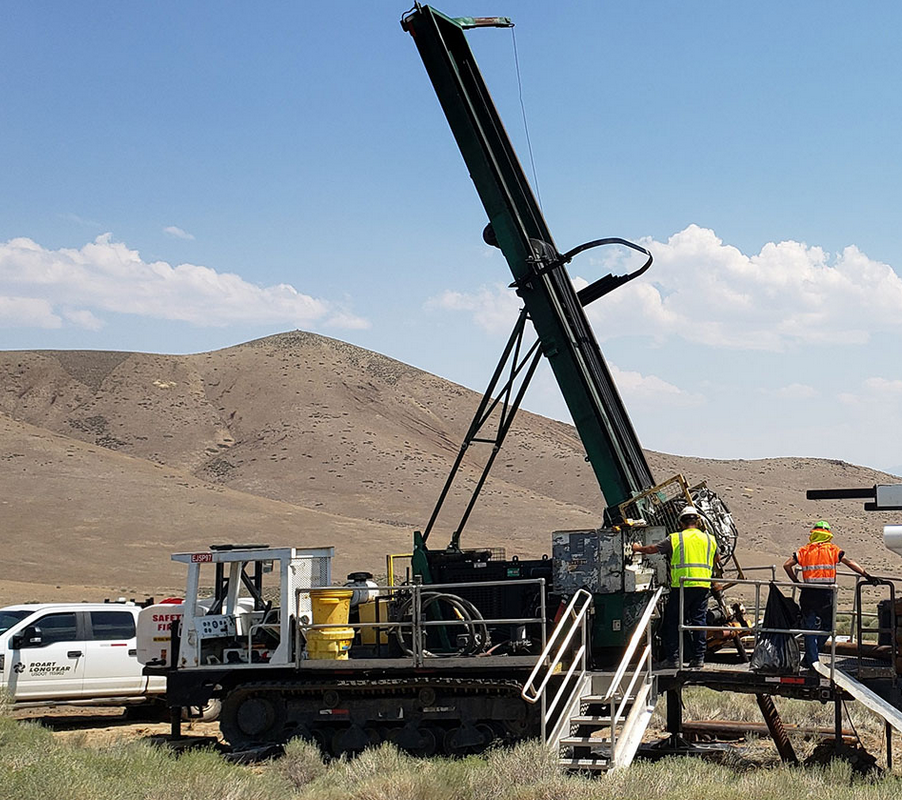
Solidus Resources took over the project in 2015, initiating further exploration that included the drilling of 232 holes, as well as comprehensive metallurgical testing, geotechnical assessments, hydrological modeling, and economic evaluations. These efforts culminated in a 2018 pre-feasibility study, which formed the basis for the permitting application submitted to the BLM.
2025 Feasibility Study and Project Economics
Earlier in 2025, Solidus published a feasibility study outlining the projected scale and financial parameters of the Spring Valley project. The study envisions a heap-leach gold mine with an operational life of more than 10 years. Average annual production is expected to exceed 300,000 ounces of gold, with an average of 348,000 ounces annually over the first five years of operations.
The feasibility study outlines all-in sustaining costs of $1,103 per ounce of gold, based on current technical and economic assumptions. The project carries an after-tax net present value (NPV) of $1.5 billion, assuming a 5% discount rate, and an internal rate of return (IRR) of 36%. The estimated payback period for initial capital costs is two years.
Initial capital expenditures required to bring the mine into production are estimated at $823 million. These figures are based on gold price assumptions of $2,400 per ounce in 2028 and $2,200 per ounce from 2029 onward, as reflected in industry consensus projections.
Resource Estimates and Mine Design
The feasibility study incorporates the most recent resource estimate for the Spring Valley deposit. This includes 4.4 million ounces of gold in total mineral resources, inclusive of reserves, and an additional 600,000 ounces in the indicated and inferred resource categories. These estimates were calculated using a gold price of $1,700 per ounce and a cut-off grade of 0.004 ounces per ton.
The mine is designed as a conventional open-pit, heap-leach operation, relying on established mining methods suitable for large-scale, low-grade gold deposits. The project will involve ore crushing, stacking, leaching, and gold recovery facilities, along with associated infrastructure such as water supply systems and haul roads.
The BLM’s approval follows a comprehensive environmental review under the National Environmental Policy Act (NEPA), including public consultation, environmental impact assessments, and coordination with other federal and state agencies.
While the ROD represents federal approval, the project must still secure various state-level permits before full-scale construction can begin. These include water use permits, air quality certifications, and other regulatory clearances overseen by Nevada state agencies.
The approval of Spring Valley comes at a time of renewed interest in domestic mineral production, particularly gold, amid global supply chain uncertainties and increased demand for strategic resources. The approval also reflects a broader trend in U.S. resource policy aimed at reducing reliance on imported metals and encouraging domestic mining investments.
Spring Valley’s status as the largest independent gold mine in the country will place it among the leading U.S. gold producers in terms of annual output, once operational. Its development is expected to have economic implications for Pershing County and the surrounding region, including job creation and increased demand for goods and services.
With federal approval now secured, Solidus Resources is expected to initiate construction planning and finalize procurement for key infrastructure components. The company has not yet announced a definitive construction start date or projected first production timeline.
In the meantime, the firm will continue working with local stakeholders and regulatory bodies to complete outstanding state-level requirements and to ensure compliance with environmental and operational standards.
The post Spring Valley Gold Project in Nevada Receives Federal Approval, Marking First U.S. Greenlight for a Domestic Gold Mine in Over a Decade appeared first on MiningFeeds.