


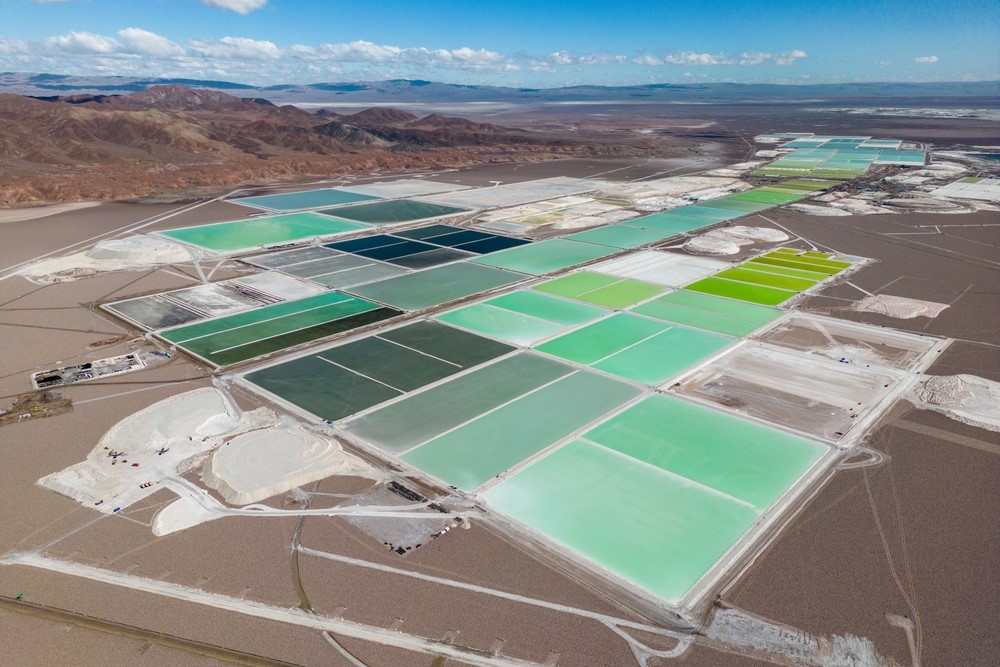
Smackover Lithium, a joint venture between Standard Lithium (TSX-V, NYSE-A: SLI) and Norway’s state-owned oil and gas company Equinor (NYSE: EQNR), has released the results of its definitive feasibility study (DFS) for the South West Arkansas (SWA) lithium project. The findings suggest what the company refers to as “robust economics” for a proposed lithium extraction and chemicals production facility in the Smackover Formation, located in the southwestern region of Arkansas.
The SWA project, if completed as planned, would become the first commercial lithium production site in the Smackover Formation, a geologic formation containing lithium-rich brine that extends from Florida to Texas. Analysts estimate that the formation could hold over 4 million tonnes of lithium, positioning it as a potentially significant domestic resource for the U.S. battery supply chain.
“The robust economics from our SWA project DFS confirm what we’ve known for a long time – that this is a world-class asset and opportunity,” Standard Lithium’s president and COO Andy Robinson said in a news release.
“Through years of extensive testing and development we have substantially de-risked the process technology and increased our confidence in project execution,” Robinson added. “We are well-positioned to move the project towards a final investment decision and are excited by the prospect of being a domestic champion for securing critical minerals production in the United States.”
The SWA project is a greenfield development that aims to produce battery-quality lithium carbonate (Li₂CO₃) from underground brine. The joint venture received a $225 million grant from the U.S. Department of Energy in January 2025 to support the construction of Phase 1 of the project. The funding aligns with broader federal efforts to secure domestic supply chains for critical minerals such as lithium, which is used extensively in electric vehicles (EVs), energy storage systems, and portable electronics.
According to the DFS, the project’s initial design targets production capacity of 22,500 tonnes per annum (tpa) of lithium carbonate. The facility would extract lithium from brine with an average concentration of 481 milligrams per liter (mg/L), supporting an operating life of at least 20 years, with room for significant expansion depending on further development and demand.
The project’s estimated capital expenditure (capex) stands at $1.45 billion. This figure is based on an 18-month front-end engineering design (FEED) process, which, according to the company, provides a higher degree of capital definition than is typical in DFS-level studies. The capex estimate incorporates learnings from pilot operations, with the company noting potential for improved capital efficiency in future project phases.
These figures are based on the planned production scenario over the 20-year project life.
The project’s measured and indicated resources are reported at 1,177,000 tonnes of lithium carbonate equivalent (LCE), with an average brine concentration of 442 mg/L across a 0.5 km³ brine volume. Proven reserves are estimated at 447,000 tonnes LCE, drawn from a brine volume of 0.2 km³ and a higher average concentration of 481 mg/L.
Since the completion of the project’s prefeasibility study (PFS), Smackover Lithium has undertaken additional exploration activity, including the re-entry of existing wells and the drilling of a new infill well. These efforts were conducted to support upgrading the resource classification and improve modeling of proven and probable reserves.
For the initial phase of lithium extraction, the joint venture will license Koch Technology Solutions’ lithium selective sorption process. This technology, categorized under direct lithium extraction (DLE) methods, is designed to extract lithium more efficiently and with lower environmental impact than traditional evaporation pond systems. The process includes performance guarantees and is expected to contribute to the project’s economic and technical viability.
Smackover Lithium has secured regional exclusivity for the licensed technology within the Smackover Formation under a joint development agreement. According to the company, this exclusivity presents an opportunity for future cost optimization and scalability across other portions of the formation.
The release of the DFS comes at a time when global demand for lithium continues to rise. With the growth of electric vehicle markets and increasing investment in renewable energy infrastructure, lithium has emerged as one of the most strategically important elements in the clean energy transition. However, the U.S. currently relies heavily on imported lithium, much of it from South America and Australia.
If the SWA project proceeds to construction and operation, it could mark a significant step toward developing a domestic lithium supply chain. Industry analysts and government officials have previously cited the Smackover Formation’s potential to support this goal, but until now, there has been no commercial-scale lithium extraction from the formation.
The post Smackover Lithium Releases Feasibility Study for Arkansas Project, Outlining First Commercial Lithium Production in Region appeared first on MiningFeeds.