




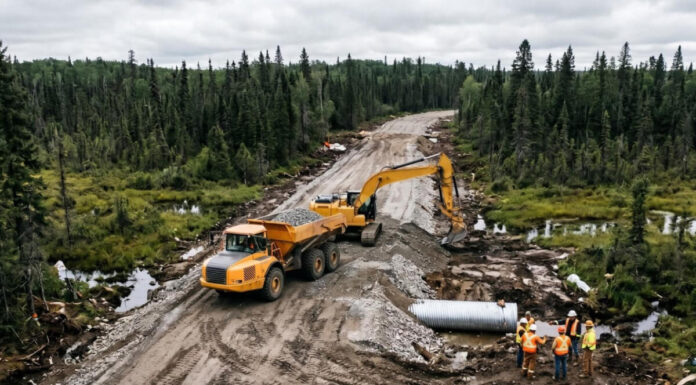
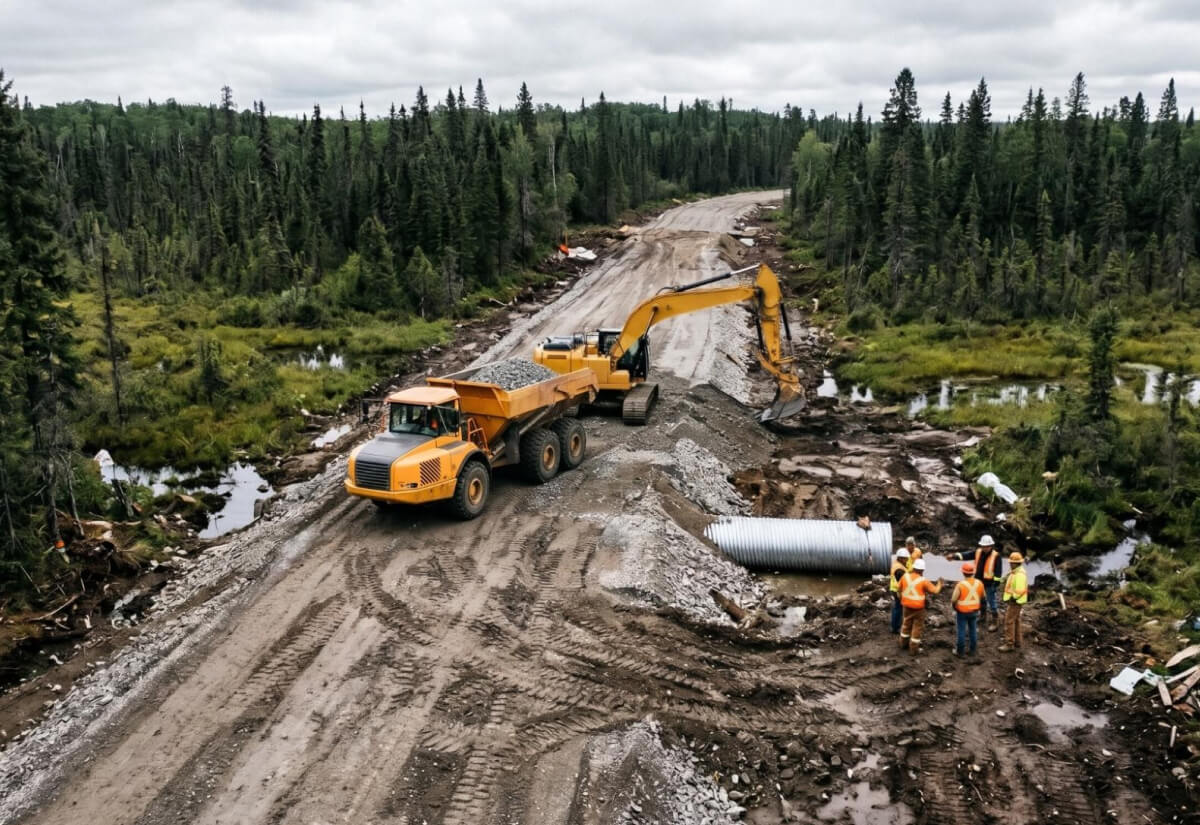
Canada has committed up to C$1 billion over three years to finance roads into Ontario’s Ring of Fire, matching provincial funding first pledged in 2014. The agreement could bring total government commitments to C$2 billion for transportation routes needed to develop nickel, copper, and chromite deposits in northern Ontario.
Prime Minister Mark Carney and Ontario Premier Doug Ford announced the investment on Oct. 21 as part of a C$8.7-billion package to support Ontario’s mining, steel, and automotive industries.
Opening Access to Major Mineral Deposits
The Ring of Fire contains undeveloped mineral deposits approximately 500 kilometres northeast of Thunder Bay. Permanent road connections would allow mining companies to transport heavy equipment, construction materials, fuel, and mineral concentrates between the remote district and Ontario’s existing highway system.
Australian-owned Wyloo is advancing the Eagle’s Nest nickel-copper-platinum group metals project near McFaulds Lake. Its proposed underground operation would process approximately 3,000 tonnes of ore daily over an initial 15-year mine life.
Wyloo estimates annual production of 15,000 tonnes of nickel, 6,000 tonnes of copper, 70,000 ounces of palladium, 22,000 ounces of platinum, and 340 tonnes of cobalt. The project remains in feasibility studies, with transportation access among the key development requirements.
The region also contains substantial chromite resources, including Wyloo’s Black Thor and Blackbird deposits. Blackbird, situated less than one kilometre from Eagle’s Nest, contains an estimated 44 million tonnes of chromite grading more than 35% chromium oxide.
Road development could support future extraction and shipment of these minerals for use in stainless steel, battery manufacturing, and other industrial applications.
C$2 Billion in Commitments for Mining Roads
The proposed transportation system comprises several linked corridors extending north from Ontario’s existing highways.
Construction began June 30 on improvements to 97 kilometres of Anaconda and Painter Lake roads near Aroland First Nation. The upgrades will connect Highway 643 with the northern road network.
The 184-kilometre Marten Falls Community Access Road, where construction started in August, will extend north from Painter Lake Road.
The 107-kilometre Webequie Supply Road, which began construction in June, will provide access from Webequie Airport toward the McFaulds Lake mining area.
A proposed Northern Road Link would connect the Marten Falls and Webequie routes, completing the transportation corridor.
Ontario targets November 2030 for opening the Webequie, Anaconda, and Painter Lake routes, with the remaining connections scheduled for November 2031, subject to approvals and consultation.
Permitting and Indigenous Participation
The federal-provincial agreement also introduces closer coordination of environmental permitting and identifies potential additional financing through the Canada Critical Minerals Accelerator, First and Last Mile Fund, investment tax credits, and shared funding arrangements.
Federal environmental decisions were issued in June for the Webequie Supply Road and in August for the Marten Falls Community Access Road. Both projects still require further authorizations and environmental conditions.
The Northern Road Link is still undergoing assessment. Neskantaga First Nation opposes its proposed route through traditional territory and maintains it has not granted consent.
Canada and Ontario will establish a working group to address First Nations economic participation, community development, and possible Indigenous conservation areas.
The federal financing commitment advances the infrastructure program that mining companies have awaited for years. The completion of the road network, outstanding regulatory decisions, and mine investment approvals will ultimately determine when commercial mineral production can begin.
The post Canada Commits C$1 Billion to Unlock Ontario’s Ring of Fire Mineral Deposits appeared first on MiningFeeds.